


How South Africa Regulates Traditional Medicine, Except Its Own
The case for a fair, risk-based regulatory system for traditional and natural health products

By Anthony Rees – National Chairman (TNHA)
The issue of Traditional African Medicines adds another troubling dimension. In response to an MP, Dr Semete-Makokotlela indicated that commercial Traditional African Medicines would be regulated in future under a new category, Category E. The timing is striking. Just one week earlier, the below report highlighted SAHPRA’s approximately 30 years of inaction in establishing an equivalent regulatory framework for Traditional African Medicines in alignment with the Equality Clause of Constitution’s Bill of Rights. The issue was also raised in the BizNews article published last month, titled “Food is medicine, but SAHPRA treats it like a drug. Illegally”, to which we contributed. The announcement raises an obvious question: why has meaningful action taken so long, and what concrete proposals underpin Category E? The natural health sector cannot be expected to trust assurances that appear inconsistent with the regulatory record and stakeholders’ lived experience. SAHPRA must demonstrate, through published legal instruments, transparent processes and genuine consultation, that it is addressing these concerns. Credibility cannot be restored by statements to Parliament alone; it requires verifiable action and accountability.
Issued: 10 October 2026 – TNHA
Cosmopolitan health shop shelves with complementary medicines (left), and modern Traditional African Medicine shop shelves (right). Traditional African Medicines are increasingly being commercially sold in modern health product packaging.

South Africa has a striking contradiction in the way it regulates natural and traditional medicines.
On the one hand, products from several foreign healing traditions, namely Traditional Chinese Medicine, Ayurveda, Unani-Tibb and Western herbal medicine, can be sold within a formal regulatory framework. Their products can carry manufacturer details, batch numbers, expiry dates, dosage information, warnings and other prescribed information.
On the other hand, many products originating from South Africa’s own indigenous African healing traditions remain outside an equivalent product-safety system.
This creates a two-tier system. One category of traditional medicine is visible to the regulator and subject to requirements for safety, quality, labeling and monitoring. Another, including commercially sold Traditional African Medicines, can circulate with little or no equivalent oversight.
This situation is neither fair nor adequate for public protection. South Africa needs a single, inclusive and risk-proportionate regulatory framework for traditional and natural health products, rather than continuing to force diverse products through a pharmaceutical regulatory system designed for conventional orthodox medicines
A two-tier system
Under the 2017 General Regulations, published under Government Notice 859 in Government Gazette 41064 on 25 August 2017, the definition of “Complementary Medicine” specifically encompasses several traditions, including Traditional Chinese Medicine, Ayurveda, Unani-Tibb and Western Traditional Herbal Medicine.
Products falling within the regulated framework can be subject to requirements concerning their identity, composition, manufacture, labeling, safety and monitoring.
Consider, however, the ever expanding plethora of commercially sold Traditional African Medicines. These may be purchased from a market stall, taxi rank, spaza shop or online seller. The product may make claims about treating serious illnesses while providing little information about its contents, dosage, warnings, manufacturer or expiry date.
The consumer may have no reliable way of knowing:
- exactly which plant species are present;
- how much of each ingredient is contained in the preparation;
- whether the product is contaminated;
- whether potentially toxic substances are present;
- whether the preparation interacts with conventional medicines;
- what dose is appropriate;
- or who is responsible if the product causes harm.
There may also be no effective system for tracing the product, monitoring adverse events or recalling it from the market.
This creates a particularly serious public-health problem because traditional medicines are used extensively, including by vulnerable communities and especially infants and children.

The source material cites research documenting severe outcomes from traditional-medicine poisoning. Luyckx et al. reported mortality of approximately 34–41% in studies of traditional-medicine-associated renal failure in Johannesburg and 43% in a study involving children at Mthatha Hospital, with higher mortality where liver injury was also present and among certain vulnerable groups.
Other research cited in the paper found that traditional medicines accounted for a substantial proportion of acute poisoning cases and deaths in some South African hospital studies. A 2007 study of poisoning fatalities in the Mthatha area reported traditional medicines as responsible for 51.7% of poisoning-related mortality in the study population.
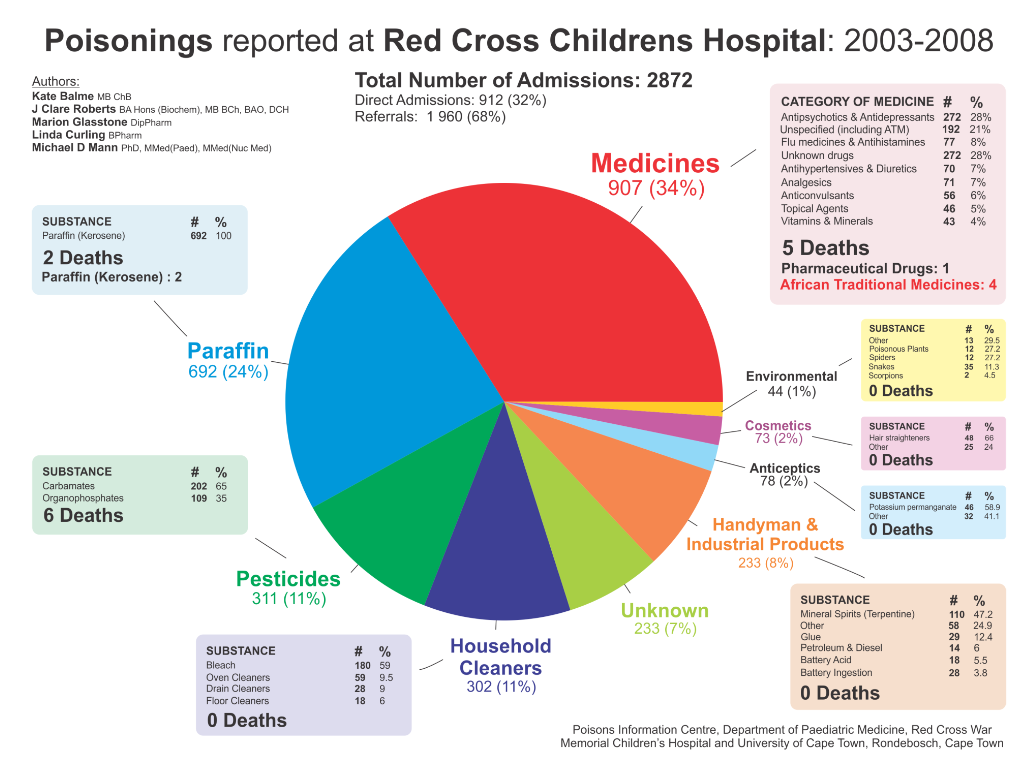
The Red Cross War Memorial Children’s Hospital, the largest referral hospital in Southern Africa runs a extensive AfriTox program, monitoring poisoning data among infants and children in the region. Research published by them revealed that Traditional African Medicine poisoning was the highest category of substances that caused morbidity for acute poising among the youth between 2003 and 2008.
The point is not that every Traditional African Medicine is dangerous.
Rather, products capable of causing harm should be subject to appropriate safety controls regardless of their cultural origin.
Twenty-seven years of documented concern and neglect
This issue is not new.
On the 23rd of July 1999, a detailed report concerning this issue was presented to the then Medicines Control Council (MCC), the predecessor of the South African Health Products Regulatory Authority (SAHPRA) by Mr Stuart Thomson, my fellow coordinator of PHARMAPACT. This presentation came about on the insistence of the then Minister of Health, Dr Nkosizana Dlamini-Zuma, who had received and read our research report in April the preceding year.
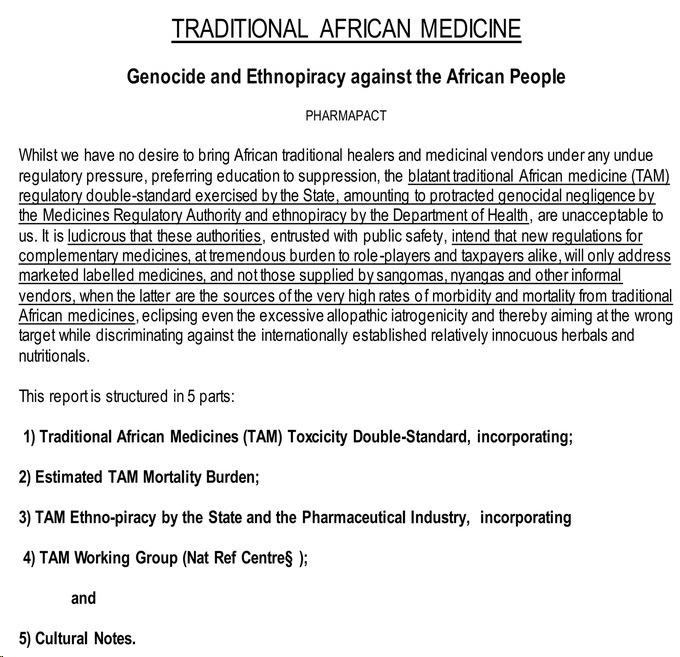
Because of the seriousness of the issue, and the MCC being told during the presentation that they were neglectful in this regard, the then Interim Chair, Prof. Helen Rees asked the full committee present to vote on striking the entire presentation from the record and the minutes of the meeting. They all raised their hands and swept the issue under the rug. Up until very recently Prof. Helen Rees was the Chair of SAHPRA’s Board since 2018. She had knowledge of this Traditional African Medicine toxicity crisis for approximately 27 years and did practically nothing to date to prevent muti deaths, especially among infants and children. Ironically, Prof. Helen Rees holds an Officer of the Order of the British Empire (OBE) and South African Order of the Baobab, for her work in women’s and children’s health.
During the first decade of the 2000’s, poison centres, The Red Cross War Memorial Children’s Hospital and South African and foreign toxicologists had documented cases involving acute poisoning from unregulated traditional remedies, with mostly infants and young children among the victims.
Since then the needle hasn’t shifted.
Parliament has created a statutory framework for traditional health practitioners.
The Traditional Health Practitioners Act 22 of 2007 established a statutory council for traditional health practitioners, however, this Act distinguishes between regulating practitioners and regulating the products they prepare and sell. The argument is that the former has received legislative attention while the latter remains inadequately addressed.
Draft regulations gazetted under the Traditional Health Practitioners Act in 2019 focused primarily on the eligibility of practitioners to enter onto its envisaged professional registers rather than dealing commercially available products. There remains no comprehensive system for product evaluation, quality standards, mandatory labeling, and product recalls covering commercially sold indigenous traditional medicines.
The result is a regulatory gap that has persisted for decades.
Traditional medicine is changing, and so are the risks
Traditional African medicine is not necessarily limited today to the preparation methods historically used by individual healers. Traditionally, many remedies were prepared by processes such as chopping, crushing or macerating fresh or dried plant material and producing water-based decoctions. These methods often guard against the extraction of certain toxic compounds.
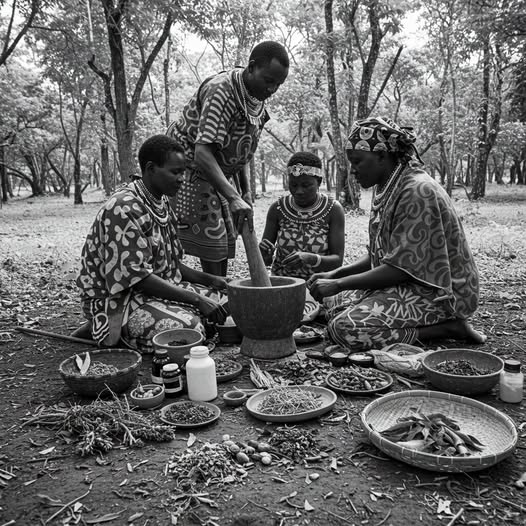
Commercialization changes this equation. Modern extraction technologies can extract active constituents much more efficiently and broadly, leading to the risk of toxic compounds being liberated into the extractions. These concentrated extracts may then be incorporated into single-ingredient or multi-ingredient products, thereby increasing risk.
A preparation made traditionally from a relatively dilute water extraction is not necessarily equivalent to a concentrated commercial extract made using modern extraction technology.
As manipulation and concentration increase, so may the need for appropriate testing and controls.
The documented risks associated with traditional medicines include:
- microbial or bacterial contamination;
- heavy-metal contamination;
- interactions with conventional medicines;
- inherent toxicity of particular plants or compounds; and
- risks arising from inappropriate preparation, concentration or dosage.
This makes the absence of basic product controls increasingly difficult to justify.
The constitutional question
South Africa’s regulatory distinction raises not only a public health issue but a constitutional one.
Section 9 of the Constitution protects equality and prohibits unfair discrimination on specified grounds, including race, ethnic or social origin, culture, religion, conscience and belief. It also guarantees equal protection and benefit of the law.
The argument is straightforward:
If regulatory protection is extended to products associated with Chinese, Indian, Greco-Arab and Western traditions, but not to products associated with an indigenous African tradition, then the distinction requires constitutional justification.
The distinction does not appear to be based on risk. Indeed, it points to evidence suggesting that some unregulated products pose significant risks.
Nor is the distinction necessarily based on pharmacology. A plant-derived product remains a plant-derived product regardless of whether its cultural origin is African, Indian or Chinese.
The concern is therefore that the regulatory distinction follows cultural and historical categories rather than a consistent assessment of product risk.
This must be viewed within South Africa’s history.
Colonial and apartheid governments restricted or criminalized aspects of African healing traditions. The Witchcraft Suppression Act of 1957 is cited as an example of legislation that criminalised practices associated with indigenous healing while Western practices were increasingly institutionalized.
The post-1994 constitutional order was intended to replace that discriminatory framework with one based on equality and dignity.
Excluding indigenous products from appropriate regulatory protection risks reproducing some of the same structural inequalities in a different administrative form.
Children make the issue particularly urgent
Section 28 of the Constitution states that a child’s best interests are of paramount importance in every matter concerning the child.
That principle is especially relevant where products can be administered to children or accidentally ingested by them.
An infant does not choose between conventional medicine, Traditional African Medicine, Traditional Chinese Medicine or any other healing system.
The responsibility for ensuring that products available to the public are appropriately labelled and subject to proportionate safety controls rests with the regulatory system.
Leaving potentially hazardous products outside effective product regulation is difficult to reconcile with the constitutional requirement concerning children’s best interests.

Despite the ongoing and somewhat unfounded criticism of natural healthcare in the mainstream media and by certain quarters within SAHPRA, it is essential to acknowledge that both health supplements and and other forms of commercial non-indigenous traditional medicines fall within the ‘supersafe’, or deminimus risk classification of individual risk. This classification signifies that the risk of mortality resulting from their consumption is less than 1 in 10 million or more.

This contrast to the documented risk base of Traditional African Medicines.
This demonstrates the lack of prioritization of risk when imposing an undue burden on complementary medicines to comply with inappropriate and burdensome pharmaceutical standards, while the products consumed by the majority of the population, i.e Traditional African Medicines pose life threatening risks. If the Minister of Health and SAHPRA are truly serious about regulating the quality, efficacy and safety of all medicines in the Republic, why do they continually refuse to grasp the nettle of Traditional African Medicines 28 years after the end of apartheid?
The 2022 Supreme Court of Appeal judgment
An important part of the argument concerns the legal authority of the 2017 complementary medicine regulations.
In 2020, the North Gauteng High Court considered the regulations and found that the Minister had exceeded the authority provided by the Medicines and Related Substances Act 101 of 1965 in regulating certain health supplements and products that were not medicines.
The matter went on appeal.
On 11 April 2022, the Supreme Court of Appeal (SCA), in Minister of Health and SAHPRA v Alliance of Natural Health Products, upheld the essential finding that a medicine under the Medicines Act must have, or claim to have, a therapeutic purpose. The court concluded that the regulations purported to regulate substantial numbers of substances that did not fall within the statutory definition of a medicine and were, to that extent, ultra vires and invalid.
The declaration of invalidity was suspended for 12 months, giving the government an opportunity to correct the legal position.
This opportunity was not used to create a comprehensive, lawful and inclusive framework.
SAHPRA subsequently continued applying regulatory requirements to products outside the lawful scope of the regulations. These allegations are matters that would need to be established against the relevant regulatory records and subsequent legal developments.
The same judgment may point toward the solution
The SCA judgment also has an important implication for Traditional African Medicines that make therapeutic claims.
If a product is marketed as treating or preventing disease, it may fall within the statutory definition of a medicine.
This means the exclusion of commercially marketed Traditional African Medicines is not necessarily required by the Medicines Act.
Instead, products making therapeutic claims could potentially fall within the Act and be subject to its requirements for safety, quality and efficacy.
On this interpretation, the problem is not that the law prevents regulation of Traditional African Medicines. Rather, the problem is that the regulatory authorities have not consistently applied the law to them.
That distinction is crucial.
The immediate public-safety issue and the broader structural problem may require two different solutions:
- Existing medicines making therapeutic claims need appropriate regulation now.
- A new legislative framework is needed for the much broader category of traditional and natural health products.
The economic consequences of the current system
The existing system also creates an economic imbalance.
Businesses selling regulated natural products from Chinese, Indian, Greco-Arab and Western herbal traditions may face substantial compliance costs, including:
- licensing and registration expenses;
- pharmaceutical-quality facilities;
- analytical testing;
- stability studies;
- toxicological documentation;
- pharmacovigilance;
- professional personnel;
- detailed labeling requirements; and
- Common Technical Document (CTD) preparation.
The SCA itself recognized that compliance can require significant effort and expense.
The difficulty is that pharmaceutical-style requirements may not always be proportionate to the risk of a particular natural product.
Traditional and herbal products can contain multiple constituents whose concentrations naturally vary according to factors such as species, soil, climate, season and harvesting conditions.
A regulatory model designed around single, chemically defined pharmaceutical molecules may therefore be poorly suited to some traditional preparations.
The result can be particularly difficult for small manufacturers and family-owned businesses.
If legitimate businesses cannot afford compliance, they may withdraw products or leave the market, while informal operators who have no compliance costs can continue selling.
Excessive regulation can have the unintended consequence of driving compliant businesses out, while leaving genuinely unsafe products outside the regulatory system.
The problem with using the wrong regulatory framework
The Medicines and Related Substances Act dates from 1965, when it was still called the ‘Drugs Act’.
Its roots lie in a regulatory environment concerned primarily with new-to-man pharmaceutical drugs and the risks associated with potent, dose-critical substances. The international response to tragedies such as thalidomide reinforced the need for strong controls over patent novel synthetic, synthesized medicines at the time.
Those controls remain important.
But the question is whether the same regulatory machinery should automatically be applied to every natural health product.
It should not.
A low-risk wellness product, a traditionally used herbal preparation, a concentrated botanical extract and a pharmaceutical medicine do not necessarily present the same risk.
They should therefore not automatically face identical regulatory requirements.
The proposed principle is simple:
Regulation should be proportionate to risk.
A product making a serious therapeutic claim and containing pharmacologically active ingredients should face substantially greater scrutiny than a low-risk product with no therapeutic claim.
Similarly, a traditional preparation with a long history of documented use should not necessarily require exactly the same evidence package as a novel pharmaceutical compound.
Why Parliament should create a new framework
Government has repeatedly attempted to stretch the Medicines Act beyond its intended purpose through subordinate regulations.
Several court decisions, including the 2022 SCA judgment, are evidence of the limits of this approach.
The proposed answer is therefore new primary legislation.
Instead of continually modifying regulations under the 1965 Medicines Act, Parliament should create a new dedicated, and separate Traditional and Natural Health Products Act.
Such legislation could establish:
- a unified regulatory framework based on equality between traditions;
- clearly defined product categories;
- risk-based regulatory tiers;
- separate requirements for therapeutic and non-therapeutic products;
- simplified pathways for products with established traditional use;
- appropriate quality and safety requirements;
- product notification or listing for low-risk products;
- full registration for higher-risk products; and
an independent authority with expertise in traditional and natural medicines.
Three councils already recognize different healing traditions
There is an important precedent within South African law.
South Africa already has separate statutory councils representing different healthcare paradigms:
- the Health Professions Council of South Africa (HPCSA) for conventional / orthodox health professions;
- the Allied Health Professions Council of South Africa (AHPCSA) for complementary and allied practitioners, including disciplines such as homeopathy, naturopathy and Chinese medicine; and
- the Traditional Health Practitioners Council, established under the 2007 Act for indigenous African traditional health practitioners.
The principle behind this structure is that different healthcare systems have different bodies of knowledge, professional practices and forms of expertise.
Equally, product regulation should reflect the same principle.
This does not necessarily mean abandoning common safety standards. Instead, it means developing appropriate regulatory expertise for different types of products while maintaining a consistent public-safety objective.
International examples
There are several international models supporting decoupling traditional medicines from drugs (orthodox medicines), and regulating them by a stand-alone regulatory authority.
India has the Ministry of AYUSH, which covers Ayurveda, Yoga, Unani, Siddha and Homoeopathy, alongside dedicated pharmacopoeial and product frameworks.
China has a dedicated national administration for Traditional Chinese Medicine operating alongside its conventional medicines regulator.
The European Union created a simplified registration pathway for certain traditional herbal medicinal products where traditional use can provide an appropriate evidentiary basis.
The World Health Organization’s Traditional Medicine Strategy likewise supports regulatory frameworks that recognize the particular characteristics and evidence bases of traditional medicines.
These examples demonstrate that recognizing traditional medicine does not require abandoning scientific standards.
The alternative is appropriate standards designed around the actual risks and characteristics of the products being regulated.
A proposed five-part solution
Broad, systemic reforms are required.
- Remove the defective regulatory remnants
The remaining provisions of the 2017 complementary-medicine regulations should be reviewed and, where unlawful or unconstitutional, removed rather than repeatedly patched.
- Do not reduce existing protection
Businesses that have been complying with regulatory requirements should not lose legitimate protections simply to create equality.
The solution should be to extend appropriate protection to currently excluded products, rather than lowering standards for everyone.
- Introduce immediate basic safeguards
While Parliament develops new legislation, basic public-health protections could be introduced for traditional products, including:
- composition information;
- appropriate warnings;
- basic labeling;
- adverse-event reporting;
- mechanisms for identifying problematic products; and
- priority assessment of products commonly administered to children.
The objective should be to ensure that consumers are not left completely unprotected while legislation is being developed.
- Give Parliament a defined timetable
A structured legal process requiring government to develop a sustainable legislative framework within a defined period is required, rather than allowing the issue to disappear into indefinite consultations.
- Create a unified Traditional and Natural Health Products Act
The long-term solution would be one comprehensive law covering all relevant traditions.
African, Chinese, Unani-Tibb, Ayurvedic, Western herbal and other recognized natural and complementary products would operate within the same overall framework, while being subject to risk-appropriate requirements.
A dedicated authority or regulatory structure could employ specialists in traditional, complementary and natural medicines and maintain appropriate pharmacopoeial, inspection and assessment capabilities.
Existing compliant businesses should also receive appropriate transitional arrangements so that they are not unfairly punished for regulatory changes.
Conclusion
South Africa does not have to choose between traditional medicine and public safety.
The real choice is between effective, proportionate regulation and a system that leaves significant parts of the market either excessively burdened or inadequately controlled.
Traditional African Medicines should not be excluded from public-health protection simply because they originate from an indigenous tradition.
At the same time, products from Chinese, Indian, Greco-Arab, Western herbal and other traditions should not necessarily be subjected to pharmaceutical-style requirements that are disproportionate to their actual risk.
The rational solution is one framework covering all traditions, with requirements determined by risk, claims, composition, manufacturing process, evidence of use and potential harm, and not cultural origin.
The immediate priorities are straightforward: ensure that potentially dangerous products can be identified and traced; require basic composition, dosage and warning information; strengthen adverse-event reporting; pay particular attention to products given to children; and establish lawful mechanisms for recalls and enforcement.
The longer-term objective should be a dedicated Act of Parliament and a regulatory authority capable of dealing specifically with traditional and natural health products.
The fundamental principle is simple:
Every consumer deserves appropriate protection, regardless of which healing tradition they choose.
And every legitimate business should face regulatory requirements that are proportionate to the actual risks of its products.
South Africa already recognizes different medical traditions through its separate professional councils. The next step is to build a product-regulatory system that applies the same principle of recognition and equality while maintaining a single standard of public safety.
The aim should not be to put traditional medicine above regulation, or below it.
It should be to put every tradition inside the same regulatory framework, with the level of regulation determined by risk rather than by culture.

About Post Author
